
Run Stronger: Why Strength Training is Your Ultimate
Game-Changer
Running is so much more than a test of cardiovascular endurance—it is a demanding, full-body athletic movement that requires immense strength, stability, and coordination. Every single stride relies on a highly synchronized muscular team working to keep you moving forward efficiently:-The Glutes(The Powerhouse): Generate the raw drive and power behind every single stride.-Quads & Hamstrings(The Shock Absorbers): Propel you forward while absorbing heavy impact with every foot strike.-The Calves(The Launchpad): Provide the snappy, spring-like push-off you need to maintain momentum.-The Core & Hips(The Anchors): Keeps your torso rock-steady to prevent wasted energy and maintain perfect balance.Integrating targeted strength work into your routine is a complete game-changer. It dramatically improves your running efficiency, delays that late-run muscle fatigue, and shields your joints against common, annoying overuse injuries. Ultimately, it is what makes your runs feel smoother, faster, and infinitely more comfortable.To help you build a more resilient stride, here are 5 highly effective, home-friendly exercises designed to target the exact muscles you need to run at your absolute best!
Beginner Running Strength exercises
1. Bodyweight Squats
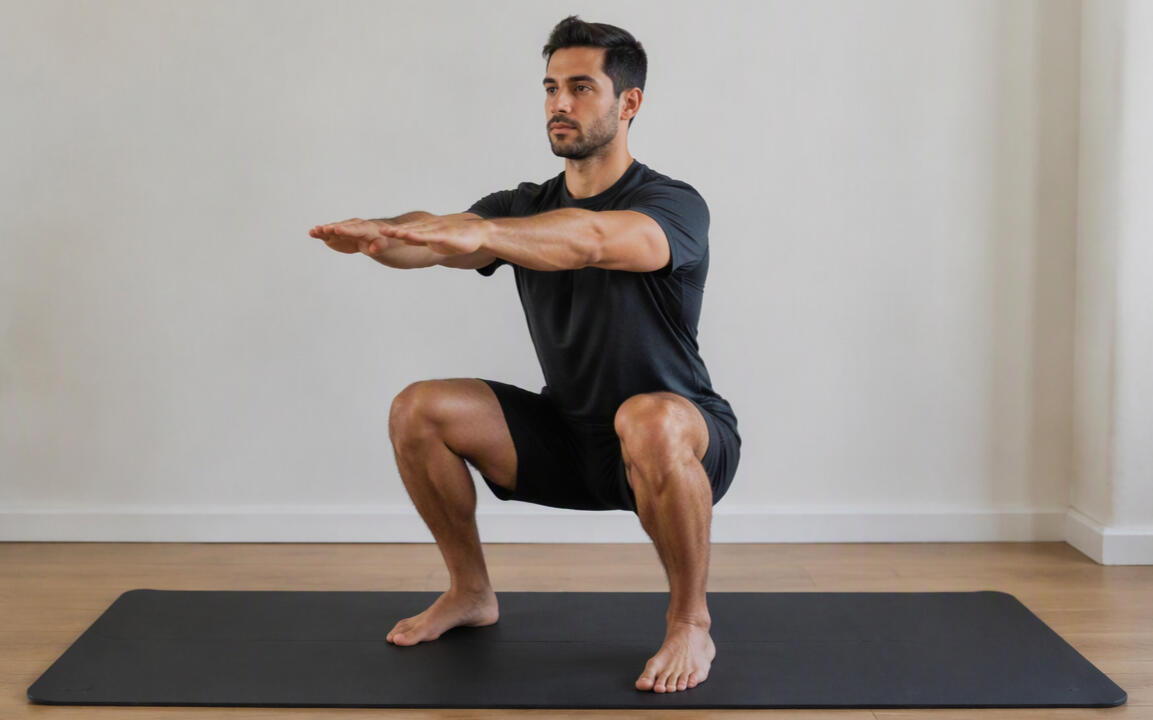
What it's for:
This is great for building baseline lower-body strength and packing more power into your stride when you run.Correct technique:
Stand with your feet about shoulder-width apart. Go ahead and brace your core, keeping your chest upright and your eyes forward. Push your hips back and bend your knees, lowering yourself down until your thighs are roughly parallel to the floor—or just go as low as feels comfortable for your joints today. To get back up, push firmly through your heels to drive yourself all the way back to standing.The Setup:
Aim for 3 sets of 12 to 15 reps, taking a 60-second rest between sets.
2. Walking Lunges
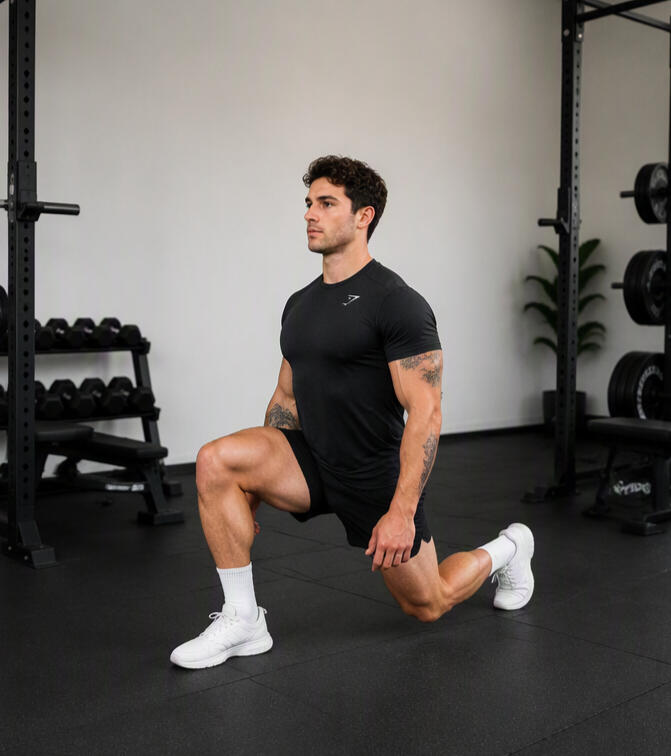
What it's for:
This builds fantastic single-leg strength and balance because it closely mimics the exact motion of your running stride.Correct technique:
Start by standing tall with your feet right together. Take a good, solid step forward and lower your hips until both of your knees are bent at about a 90-degree angle. Keep your torso upright. From there, push off your front foot and pull your back leg forward to step right into the next lunge. Just keep moving forward, alternating legs with each step.The Setup:
Do 3 sets of 10 steps on each leg, resting for 60 to 90 seconds.
3. Single-Leg Romanian Deadlifts
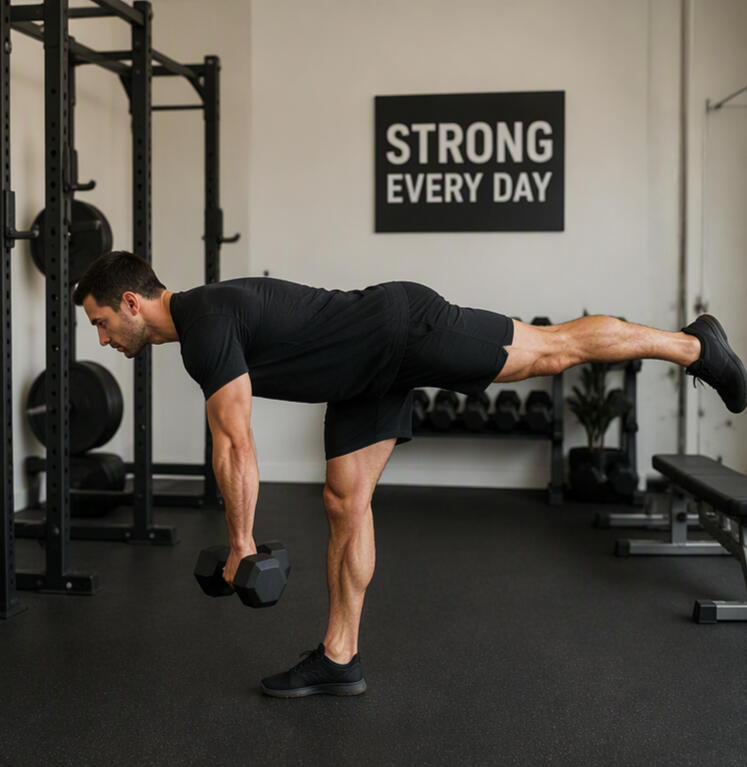
What it's for:
A brilliant challenge for your balance that isolates and strengthens the glutes and hamstrings on one leg at a time.Correct technique:
Stand on one foot. You can hold a light dumbbell or just use your bodyweight to practice the balance first. Keep a very soft, slight bend in your standing knee. Now, hinge at your hips, letting your torso tip forward while your free leg extends straight out behind you. Try to keep your back perfectly flat and your hips level. To return, drive the hips of your standing leg forward to bring yourself back up tall.The Setup:
Shoot for 3 sets of 8 to 10 reps on one leg before switching to the other, resting for 60 to 90 seconds.
4. Standing Calf Raises
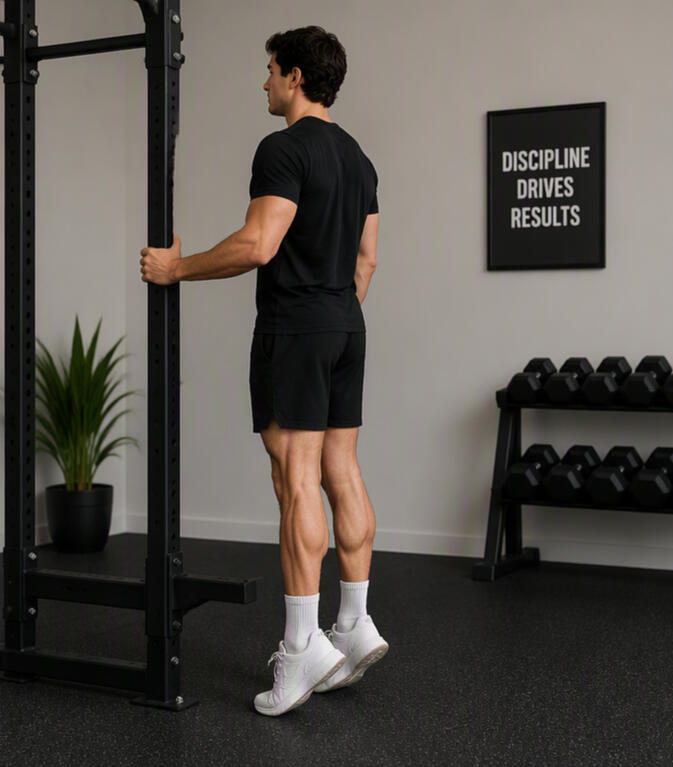
What it's for:
This builds up your calf muscles to give you a more powerful push-off and better lower-leg endurance.Correct technique:
Set your feet about hip-width apart. From there, press into the ground and rise up onto the balls of your feet as high as you possibly can. Pause for a brief second at the very top to feel the squeeze, and then slowly lower your heels all the way back down to the floor under complete control.The Setup:
We want a higher volume here: 3 sets of 15 to 20 reps, taking a shorter 45 to 60-second break between sets.
5. Step-Ups
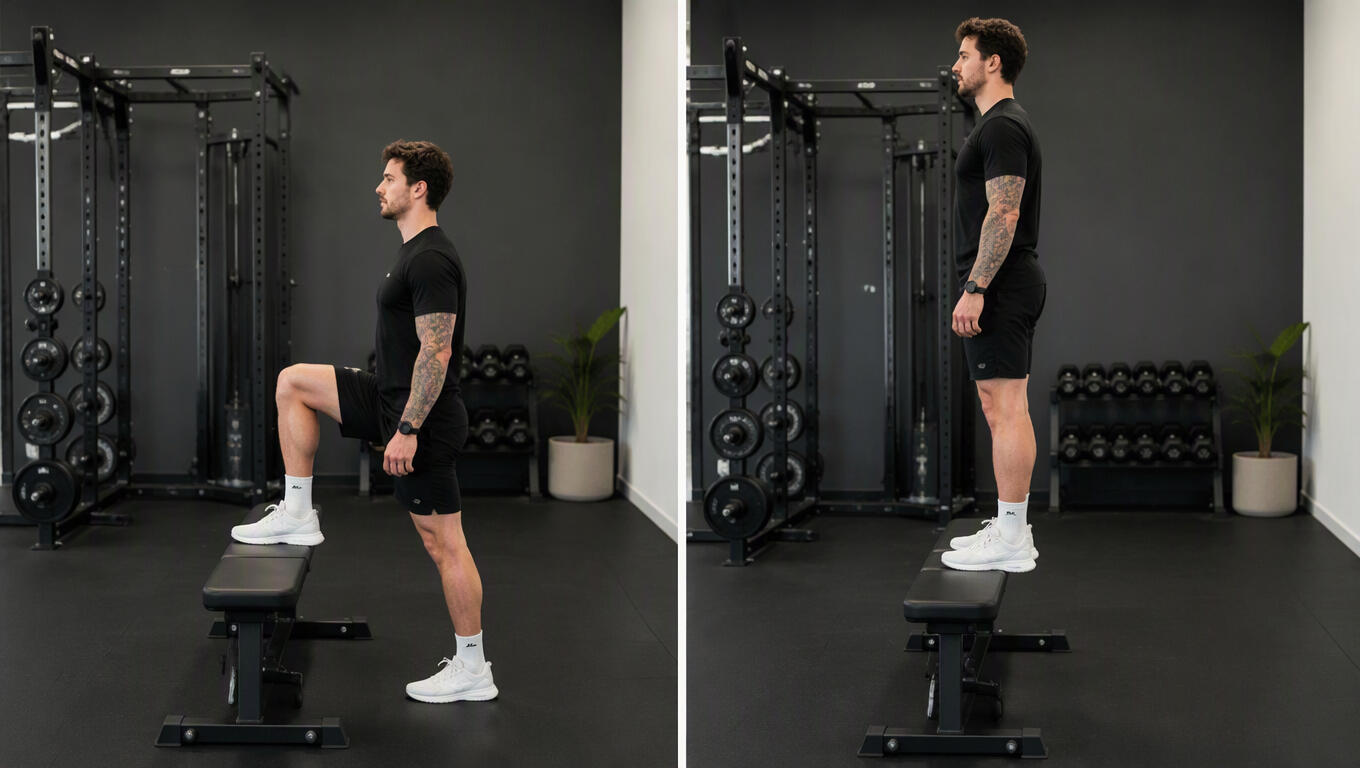
What it's for:
Excellent for dialing in your running mechanics while building single-leg power and hip stability.Correct technique:
Stand right in front of your sturdy step or bench. Step up with one foot, ensuring your whole foot is on the platform, and drive through that heel to lift yourself up. Bring your other foot up to meet it on top, then step back down slowly and with total control—don't just drop weightlessly. Knock out all your reps on one leg first to really burn it out, then switch over to the other side.The Setup:
Stick to 3 sets of 10 reps per leg, resting for 60 seconds.
By consistently threading these exercises into your weekly schedule, you are laying down the ultimate physical foundation for your miles ahead. Each of these movements targets the precise muscle groups, structural balance, and joint stability required to absorb the repetitive impact of the pavement.As your legs and core grow more resilient from this targeted strength work, you will quickly notice a massive payoff on the road: less fatigue during your long runs, a more powerful stride on the hills, and a drastically lower risk of the typical aches and injuries that sideline most runners.Stay patient with the process, focus on clean form, and let this routine transform you into a truly robust and efficient runner.
Additional Important Tips to remember while training.
Balance Strength and Cardio: Incorporate your strength exercises 2 to 3 times per week alongside your running sessions. Building the muscles around your knees, hips, and ankles creates a built-in support system. This structural strength absorbs the repetitive impact of the pavement, keeping you healthy and moving smoothly.Follow the Rule of Gradual Progression: Increase your weekly running distance slowly and gradually to protect your body. Pushing your mileage up too fast is the fastest ticket to shin splints and joint pain. Give your tendons, ligaments, and bones the time they actually need to adapt to the new workload.Prioritize Form Over Speed: Especially as a beginner, focus entirely on clean running mechanics rather than how fast the clock is ticking. Keep your posture upright, landing softly with short, quick strides beneath your body rather than reaching out with your heels. Running efficiently saves energy and dramatically lowers your risk of injury.Bookend Your Workouts Properly: Always kick things off with a dynamic warm-up—like leg swings, high knees, and lunges—to prime your muscles and wake up your nervous system. When you finish, swap the abrupt stop for a 5-minute light walk to let your heart rate settle back down and clear out metabolic waste.Master Your Recovery and Hydration: Staying hydrated isn't just a summertime rule; your muscles need water and electrolytes year-round to function and repair. Pair that hydration with adequate rest between tough sessions. Your body doesn't actually get stronger during the run—it gets stronger during the recovery periods afterward.Lean Into the Power of Consistency: Becoming a stronger, more efficient runner isn't about running until collapse once every two weeks; it's about showing up for the short, manageable sessions week after week. Trust the compound effect of regular, smart training to transform your endurance over time.
Want to Take Your Running Ability
to the Next Level?
By building strength, improving your movement, and staying consistent with your training, you're already laying the foundations for becoming a stronger, more efficient runner. The exercises in this guide are a great place to start, but as your confidence grows, having a structured plan can make it much easier to keep progressing.If you're a man looking for extra guidance, I've included a running program below that takes the guesswork out of training. It's designed specifically to help men improve their running efficiency, build endurance, and support overall fitness with short, focused workouts that fit into a busy schedule.What I like most about the program is that it doesn't simply encourage you to run more—it provides a clear framework to train smarter. Combined with the strength exercises you've learned here, it can be a useful way to build consistency, stay motivated, and continue making steady progress.If you're looking for a structured plan to complement these strength exercises, click the button below to learn more and see if it's the right fit for you.
(Disclaimer: I am an affiliate for this running program. This means if you click on the link above and choose to make a purchase, I may earn a small commission at absolutely no additional cost to you. I only recommend tools and training methods that I truly believe will elevate your fitness and add massive value to your journey.)
For more fitness and workout products, click the link below